
Are Rabbits Nocturnal? Rabbit Sleep Cycles Explained
Rather than being nocturnal, where something is active at night, rabbits are crepuscular. This just means they are active mostly around dusk and dawn. As such, rabbits tend to sleep a lot throughout the day. While it’s easy to see why many people think these animals are nocturnal, you’ll soon discover why that isn’t the case at all.
Wide Asleep
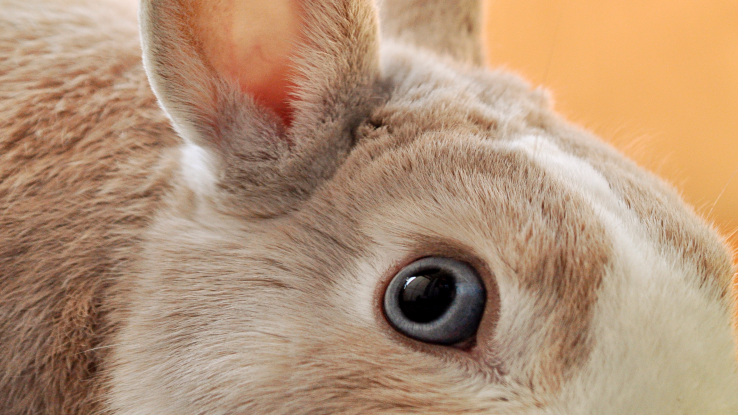
If you have a rabbit, you might be wondering when it even sleeps at all, as many of them appear to be awake 24/7. But the truth is, rabbits actually sleep an average of 8.5 hours a day. If you have a rabbit that feels safe in its surroundings, it can even sleep as much as 12 hours a day.
Not all rabbits sleep the same way. Some are content with sprawling out like dogs or cats, while others sleep with their eyes wide open. What’s more, most rabbits are very light sleepers. So rather than sleeping in long stretches, rabbits will get in short naps throughout the day to meet their sleeping needs.
This is largely because rabbits are seen as prey by many predators. As such, rabbits have had to adapt their lifestyle to accommodate one that is always on high alert. Since a threat could be right around the corner, the sleeping habits of rabbits have become so that they are aware of their surroundings.
And because many rabbits can’t differentiate between the threats out in the wild and the safe confines of your home, you’ll see these sleeping patterns in tame pet rabbits. However, the more comfortable your rabbit feels in your home and the longer they’ve been there, the more relaxed they’re likely to become.
As such, you may eventually find your pet rabbit to sleep more than it used to. It’s understandable if you’re concerned for their health at first, but this may simply be your rabbit has become accustomed to their new home and feels safe enough to sleep for longer periods of time.
How Rabbits Sleep

As you’ve just learned, rabbits have an “on-again-off-again” style of sleeping. But what is a rabbit doing when it is getting rest? In reality, most rabbits aren’t getting deep sleep. This is because they are designed to be able to spring into action if a threat comes near.
Whereas other animals may take longer to get their bearings after waking up, rabbits can quickly take off running a split second after being startled awake. This is a defensive mechanism that has served rabbits well in keeping them safe from predators.
As such, rabbits are still able to process information when they are sleeping. Rabbits don’t often drift into a deep slumber, although there are exceptions, such as those that have gotten comfortable as an indoor pet.
By remaining aware of its surroundings, a rabbit can interpret what’s going on and act accordingly. This is the reason why some rabbits sleep with their eyes open. They are still getting rest, but they are also ready for action at a moment’s notice.
Crepuscular Rabbits
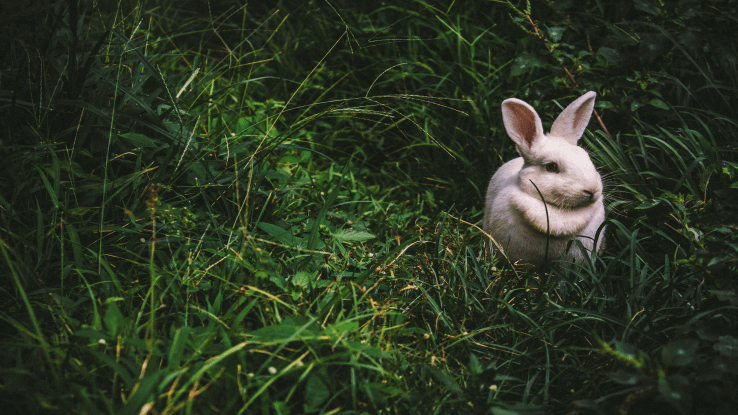
You now know that rabbits are most active during the dusk and dawn hours, where light is at its dimmest. This is no accident, as being crepuscular gives rabbits some much-needed edge over their predators.
Rabbits are often hunted by larger birds, such as hawks and owls. By limiting their hours of activity, rabbits can largely avoid their airborne predators. Hawks, for example, are diurnal creatures, meaning they hunt during the day.
And since hawks can’t see well in dim environments, these conditions are ideal for rabbits. Similarly, owls have trouble seeing in the daytime, which is why they are nocturnal creatures, capable of seeing well enough in the dark to hunt prey. If the rabbit availed itself to dark or light conditions, it would be prime prey for many predators.
That’s not to say that rabbits never come out during hours other than dusk or dawn. On the contrary, many rabbits will venture out to play or search for food during the day. This goes back to the intermittent sleeping habits of rabbits.
By getting in short sessions of sleep throughout the day, rabbits have several bursts of energy used for seeking out food or running around.
Helping Your Pet Rabbit Sleep
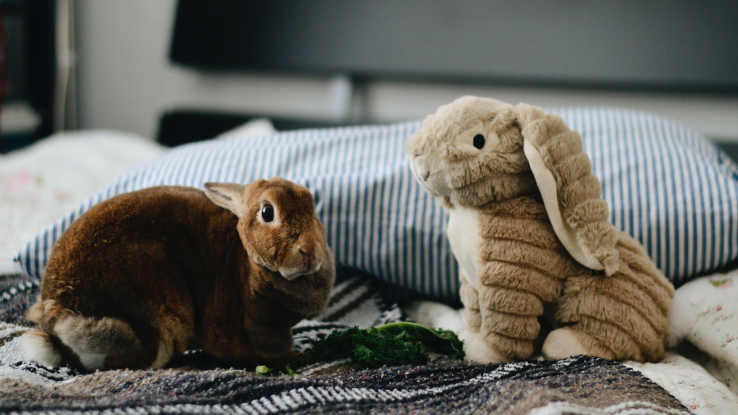
Many pet owners believe that covering a cage is the best way to help their animals get to sleep. While this might be true for some, it’s not a good idea for rabbits. Total darkness may serve to keep your rabbit awake and on the lookout for predators.
The best thing you can do for your furry friend is to make sure they have constant access to natural light. Your rabbit’s instinctive qualities will take care of the rest. Thanks to being crepuscular, rabbits sleep in both light and dark conditions.
By not limiting your rabbit’s light source, they will feel like sleeping more naturally. Try to keep a window open that allows your rabbit to get in direct contact with sunlight. This is essential, as the sunlight can provide vitamin D and possibly prevent a deficiency.
Remember, rabbits often sleep with their eyes open due to their defensive lifestyle. They are able to do this thanks to a special membrane that covers their eyeballs. Sometimes referred to as a “third eyelid,” this membrane continuously moistens the rabbit’s eye, allowing the animal to stay alert.
Furthermore, the third eyelid acts as protection against dust and debris. Combined with the ability to sleep without closing their eyes, rabbits are able to avoid many dangers and stay informed on what’s going on around them.
All of these things make the rabbit a natural survivor. What would pose a challenge for another animal, the crepuscular nature of rabbits allows them to better react to potential threats and danger.
Rabbit Sleep Positions
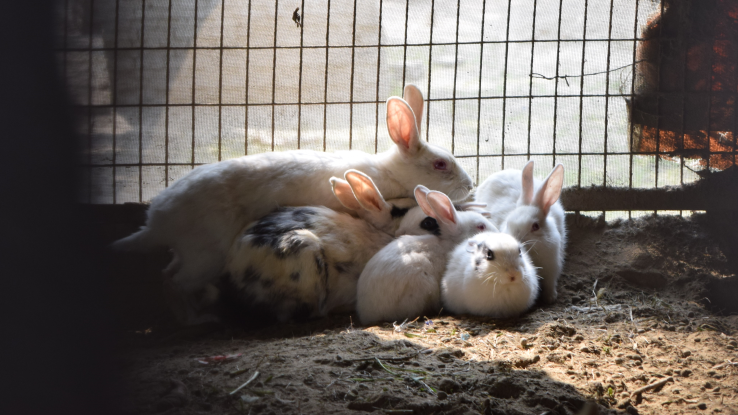
Rabbits don’t always sleep in the same position. If you have a pet rabbit, it’s important to understand what these positions actually mean. Rabbits sleep in positions that are often seen among cats. The first sleeping position is one where your rabbit sits in a ball-like form with its legs tucked underneath its body.
If you have a cat, you’ve likely seen this position many times. A rabbit sleeping like this equates to a happy animal. There is little stress and shows that your rabbit is content in its surroundings. The longer your rabbit is in your home, the more likely it is to display more relaxed sleeping positions.
Another common sleeping position among rabbits sees them sprawling out on the floor as if they were flying. This is also a clue that your rabbit is happy. Additionally, your rabbit may stretch out with its hind legs to its side or pointing straight back.
Some rabbits will lay on their sides, just like a dog or cat. If your rabbit is accustomed to your house and feels safe, you may see this sleeping position frequently.
All of the above positions are signs that your rabbit is content and comfortable. What’s more, your rabbit’s ears are likely to be pointing upward, which is another indication that all is well. But what if your rabbit is afraid or worried?
A stressed or worried rabbit will exhibit characteristics that let you know something isn’t right. Its pupils will become dilated, and its head will be low to or touching the ground. Moreover, your rabbit’s ears may be flattened and pointing behind its head.
If your rabbit has a little house, it may try hiding in it, as if avoiding a threat. A rabbit that is hiding should tell you that it feels unsafe. There are also some other positions that don’t necessarily represent sleep but rather tell you your rabbit is unhappy.
For example, some rabbits will sit up on their hind legs. While it’s cute when dogs do this, it means something completely different for rabbits. You may notice that while your rabbit is sitting up, its ears may be pointing back, as well.
Something has upset your rabbit, and it is trying to convey its dissatisfaction. Some rabbits will even growl during times of duress. If a rabbit is on the defensive, it may start thumping one of its hind legs on the ground.
Also noticeable will likely be dilated pupils, tense facial muscles, and vertical ears. You’ll want to steer clear if you see this type of behavior, as it could put you in danger of getting bitten if you get too close for your rabbit’s comfort.
Summary
Now that you know more about the sleeping habits of rabbits, you will be able to better identify when your rabbit is getting rest.
If you want to learn more about rabbits, do your research. There, you will find a wealth of information to help you provide the best care for your furry friend.
Sources:
How Do You Know When a Rabbit Is Sleeping? | Rabbit Care Tips
Twelve Things You Didn’t Know about Rabbits | Venice Memorial Gardens Pet Cemetery & Funeral Home
Sleep Habits of Pet Rabbits | Bunny Lady





